![]() |
![]() |
|
|||||||||
|
|
|
||||||||||
| |
|
||||||||||
| |
|
||||||||||
|
|
|
|
|||||||||
| |
|
||||||||||
|
|
|
||||||||||
A
single circumnambulation around Mount Kailish wipes away the sins of a
lifetime. Revered by Buddhists, Hindus, Jains and Böns, this remote
Tibetan mountain attracts scores of pilgrims. Hindus who walk around the 32-mile circumference of Mount Kailash use
the term parikrama. They believe that Lord Shiva, one of their three main
gods, resides atop what they call Mount Meru. Tibetans refer to the clockwise
circumambulation as a kora. Both words mean the same thing: pilgrimage.
Doing a walk around the mountain can wipe away a lifetime’s worth
of sins, or negative karma as is the term in Eastern religions. “He
who performs the Parikrama, the ritual circumambulation of the holy mountain,
with a perfectly devoted and concentrated mind goes through a full cycle
of life and death” Lama Anagarika Govinda, ‘The Way of the
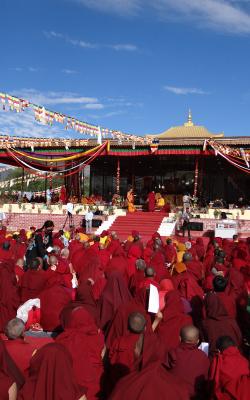
White Clouds.’ Devout Tibetan Buddhists will do full length prostrations, a feat which takes several weeks, around Mount Kailash, increasing the amount of purification they will receive. Many pilgrims do a complete round of the mountain in one day, an accomplishment made more difficult by the 15,000-foot high altitude. Pilgrimages are by their very nature meant to be arduous, and as the Ngari region of Mount Kailash has no airports or train stations nearby, people arrive at their spiritual destination by foot, horseback, yak or jeep. Tarchen is a small settlement near the south face of the mountain; the place where most pilgrimages begin. Those unwilling or unable to make the kora around the mountain can hire someone who will, thereby splitting the accumulated merit 50/50. This doesn’t allow either the person who sponsors the kora or the one who actually makes the journey to attain instant enlightenment. For those who make the kora, aside from enduring highly changeable weather conditions, there are four prostration points in which to pay physical homage. Many pilgrims make sure they visit the three monasteries located along the path. Near the top of the kora is the Shiwa Tsal, named after the famed cremation grounds in India. Pieces of clothing, a lock of hair or a drop of blood are left there as an offering, signifying the pilgrim’s understanding of death and rebirth. At the highest point of the circuit, just over 18,000 feet, is Dolma La Pass, meaning ‘She Who Helps Cross.’ [The Sanskrit name for the female Buddha is Tara]. This refers to the crossing over to liberation as well as being able to complete the pilgrimage circuit around Kailash. The great boulder of Tara is swathed with long, colorful strings of prayer flags which send out messages of peace with each flap they make in this windy region. Mount Kailash is also the source of four major rivers: the Indus, the Brahmaputra, the Karnali and the Sutleg. The comparison to the Indian legend of Mount Meru from whose summit flows four great rivers that irrigate all of Asia is hard to miss. Eighteen miles southeast of Kailash is the circular, turquoise Lake Manasarovar, or Tso Rinpoche, [Precious Lake], a 64-mile circuit, which is rarely completed except by the most devout. Bathing in the lake, or even dousing one’s head with the holy water, is said to be of enormous spiritual benefit to those who can brave the icy water which many claim contain miraculous powers. Hindus are told that complete immersion into the lake ensures they be reborn as a god. Tibetans, on the other hand, avoid bathing in the lake so as not to make it dirty. This is a freshwater lake, three miles above sea level. There is a saltwater lake, separated by a narrow peninsula, named Raksas Tal, or devil’s lake. Pilgrims don’t bathe or circumambulate this crescent moon-shaped body of water, but do pay their respect by glancing in its direction. Five monasteries have been rebuilt on the shores of Lake Manasarovar since 1981—before the Chinese invasion in 1959 there were eight. Fatigued pilgrims are allowed to stay in the monasteries. Fewer than 500 Indian nationals are allowed to make the pilgrimage per year due to the Chinese and Indian governments. Most of the Indians allowed in are selected via a lottery and the ability to pay their own way is evident in the fact that the majority of them are middle-aged businessmen from large cities. Before the Cultural Revolution, pilgrims were selected by their bountiful faith. They traveled on foot or horseback. Some of them made the journey by doing the full-length prostrations along the way, an endeavor which could last for years, depending upon the distance and the weather conditions. Few pilgrims were armed, making them prey to thieves. But even under such extreme conditions, they were unafraid of death; dying during a pilgrimage pretty much guaranteed them a lot of good karma points. Pilgrimages require a degree of flexibility that most people aren’t required to possess in a world with guaranteed insurance benefits and retirement plans. To make a spiritual journey is to rid oneself of habits and to open the heart, making the pilgrim ego less and pure; then allowing this transformation to reach out and positively affect others. ”There is no place more powerful for practice, more blessed, or more marvelous than this; May all pilgrims and practitioners be welcome!" Milarepa, Tibetan Buddhist yogi [circa 1052 – 1136] |
|
||||||||||
| |
|
||||||||||
| |
|
||||||||||
|
|
|
||||||||||
| |
|
||||||||||
| |
|
||||||||||
| |
|
||||||||||
| |
|
||||||||||
| |
|
||||||||||
| |
|
||||||||||
| |
|
||||||||||
| |
|
||||||||||
|
|
|
||||||||||
| |
|
||||||||||
| |
|
||||||||||
| |
|
||||||||||
| |
|
||||||||||
| |
|
||||||||||
| |
|
||||||||||
|
|
|
||||||||||
| |
|
||||||||||
| |
|
||||||||||
| |
|
||||||||||
| |
|
||||||||||
|
|
||||||||||
|
|
||||||||||
|
|
For detail itineraries and bookings please contact |
|
|
||||||||
|
|
|||||||||||
|
|
|||||||||||
|
|
|||||||||||
| ©COPYRIGHT
2005. ALL RIGHTS RESERVED. ANCIENT TRACKS. |
|
||||||||||
|
|
|
||||||||||
|
|
|
|
|
|
|
||||||