| 9 |
What is included in a trek?
|
| |
Transportation
both ways (to the starting point and coming back from the finishing
point by taxi or mini bus), Tents, mattresses, pack Horses, food,
guide, cook, cooking gears, wildlife fees, camping fees, and inner
line permission where its needed.
|
| |
| 10 |
What
about drinking water during the trek?
|
| |
For
the first day we will provide you mineral water, but from 1st evening
of the trek the cook will supply boiled water, which would be pure
just coming from the glaciers, supply will continue till the end
of the trek.
|
| |
| 11 |
Who
carries the things/gears, and food during the trek?
|
| |
In
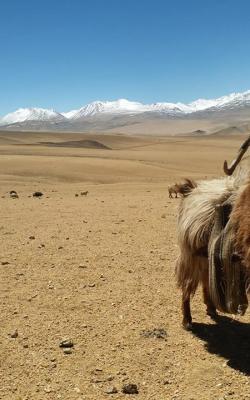
Ladakh normally you have to trek around the height of 4000mts and
the passes are around 5000mts so its very difficult to carry heavy
loads at this height, that’s why we provide horses/ponies
they will carry everything, trekkers will have to carry only the
pack lunch, water, camera, note book, and some delicate things which
they don’t want keep with the horses.
|
| 12 |
Which
are famous mountaineering peaks in Ladakh?
|
| |
The
famous mountaineering peaks in Ladakh are, Sasser Kangri 7627mts in
Karakuram range Nun 7135mts Kun 7085mts Zanskar range Kang-yatse 6400mts
Stok Kangri 6150mts in ladakh range.
|
| 13 |
Where
do i need a special permission? |
| |
As
Ladakh is surrounded by China in the east and from south west it’s
covered by Pakistan, there fore doing sight seeing or trekking near
to these boarder areas you need to apply for inner line permission,
which you can obtain just with in a day through any local travel
agent based in Leh.
Foreigners are required to carry a valid permit visiting Dha Hanu,
Nubra, Korzok, Samad Rokchen, Karnak and Pangong Tsho, Permits can
be made with any travel agent, paying a small fee.
|
|
 |